Dyness AMOR-7.6/9.9 (9.9 kWh)
7.6 kW, 9.9 kWh, energy storage system. Source: CEC Energy Storage System List (Nov 2026) · CEC listing date: · Registry snapshot: .
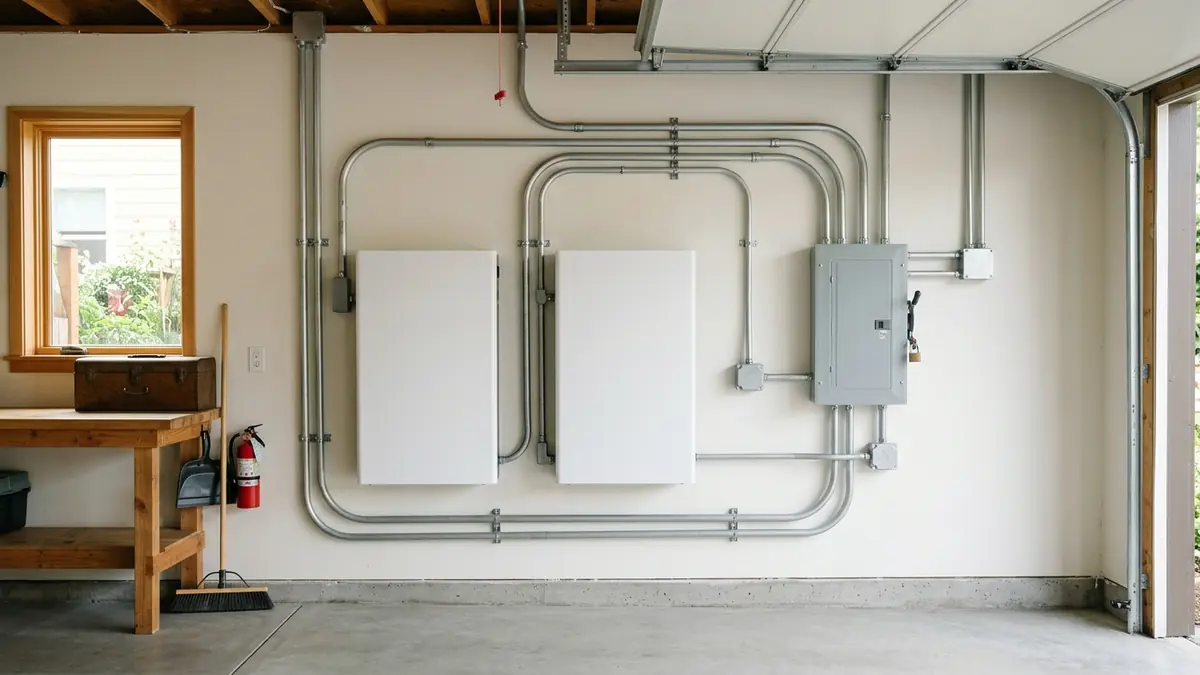
Storage Specifications & Safety Listing
| Manufacturer | Dyness |
|---|---|
| Model Number (MPN) | AMOR-7.6/9.9 |
| Battery Chemistry | NMC / Lithium-Ion |
| Usable Energy Capacity | 9.9 kWh |
| Max Continuous Discharge | 7.6 kW |
| Round-Trip Efficiency (RTE) | 93% |
| PV DC Input (DC-Coupled) | AC-Coupled / External Hybrid Inverter |
| Nominal AC Grid Voltage | 240 Vac |
| Safety Listing | UL 9540 (Ed. 2 : 2020) |
| Certifying Laboratory | CSA Group |
Single-Unit Blackout Runtime Estimates
Modeled as usable kWh × √(RTE) ÷ load kW (9.9 kWh × 96.4% one-way discharge efficiency) with no solar recharge. Reserve buffer (e.g., 10%–20% user reserve) reduces usable outage hours proportionally.
| Light Essentials (0.8 kW — fridge, Wi-Fi, lights) | 11.9 hrs |
|---|---|
| Standard Backup (1.5 kW — + sump/freezer/home office) | 6.4 hrs |
| Heavy Load / HVAC (4.5 kW continuous) | 2.1 hrs |
Multi-Unit Stacking Matrix
| Units | Total kWh | Cont. kW | 1.5 kW Backup | 4.5 kW HVAC |
|---|---|---|---|---|
| 1× | 9.9 kWh | 7.6 kW | 6.4 hrs | 2.1 hrs |
| 2× | 19.8 kWh | 15.2 kW | 12.7 hrs | 4.2 hrs |
| 3× | 29.7 kWh | 22.8 kW | 19.1 hrs | 6.4 hrs |
| 4× | 39.6 kWh | 30.4 kW | 25.5 hrs | 8.5 hrs |
Outage Sizing Notes & FAQ — Dyness AMOR-7.6/9.9
When sizing a residential storage bank around the Dyness AMOR-7.6/9.9 (9.9 kWh usable, 7.6 kW continuous), evaluate both energy duration (kWh) and peak starting current (kW / LRA). On a typical 1.5 kW essential-loads subpanel, one unit delivers roughly 6.4 hours overnight before morning solar recharge begins. Under California NEM 3.0 or Time-of-Use (TOU) arbitrage rates, shifting 8–12 kWh per evening peak window aligns well with a single- or dual-unit stack, while multi-day winter storms or whole-home 240V central AC generally require 1× stacked units plus a compressor soft-start kit.