Passive Solar Heating: Glazing Ratios, Overhang Math & Thermal Mass
Well-designed passive solar geometry cuts US winter heating loads 40% to 70% before installing a single kilowatt of rooftop PV — using true-south glass, calibrated eaves, and interior thermal mass. We preserved the core 2008 passive solar design concepts and architectural notes at the legacy URL.
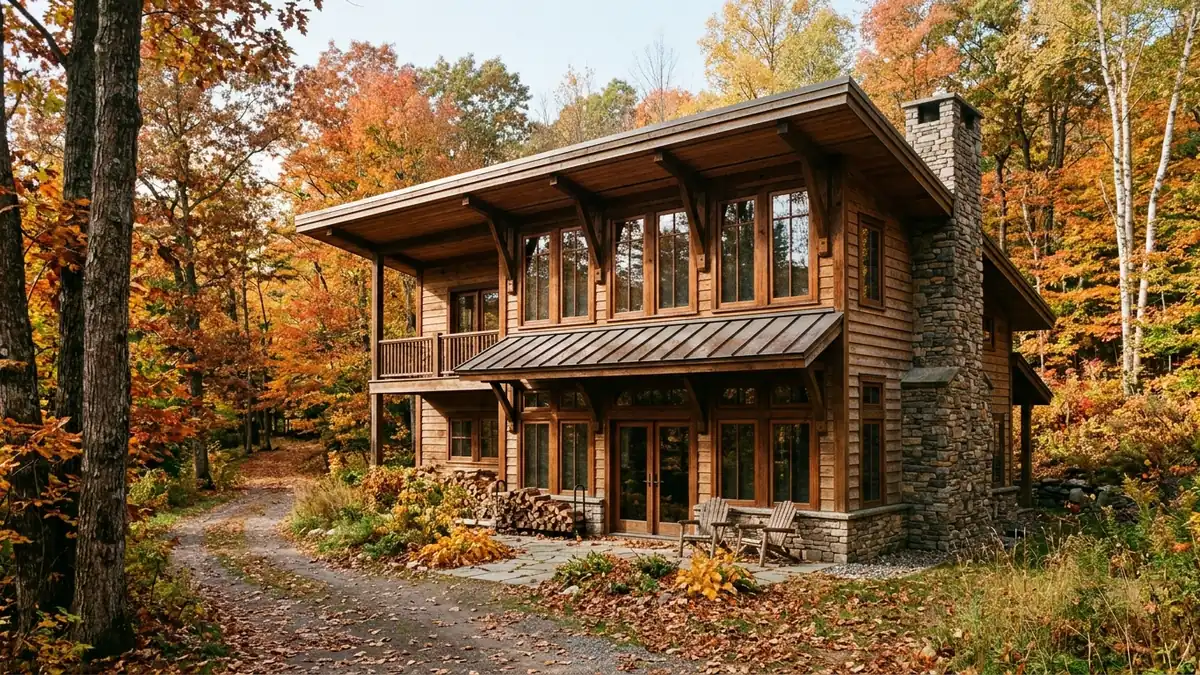
The Five Non-Negotiable Rules of Passive Solar Heating
- True-South Aperture (±15°): Orient primary collector windows within 15° of true south (not magnetic south). Select high Solar Heat Gain Coefficient glass (SHGC 0.50–0.65) on south walls in IECC Zones 5–7, and low-SHGC glass (≤0.25) on west-facing walls to block brutal afternoon overheating.
- Window-to-Floor Glazing Ratio (7%–12%): Keep south-facing glass between 7% and 12% of conditioned floor area. Going above 12% without massive concrete/stone floors triggers daytime overheating and severe nighttime heat loss.
- Thermal Mass (5–6× South Glass Area): Provide 4–6 inches of exposed concrete slab, quarry tile, or masonry stone in direct winter sun — roughly 5.5 sq ft of sunlit mass per 1 sq ft of south glazing — to bank midday BTU for cold nights.
- Seasonal Eave Overhang Math: At 42°N latitude (New York, Chicago, Boston), solar noon altitude swings from 71.5° on June 21 down to 24.5° on December 21. A 3.5- to 4-foot roof overhang shades upper windows all summer while admitting full winter sun.
- Tight Air-Sealing & Insulation First: Passive gain only shines when heat stays inside (≤1.5 ACH50 airtightness, R-49+ attic, continuous exterior rigid foam).
Recommended South Overhang Depth by US Latitude
| US Latitude Band | Example Cities | Summer Noon Alt (Jun 21) | Winter Noon Alt (Dec 21) | Overhang Ratio (Depth / Window Height) |
|---|---|---|---|---|
| 30°N – 34°N | Austin, Dallas, Phoenix, Atlanta | 81° – 83° | 33° – 37° | 0.25 – 0.35 |
| 36°N – 40°N | Denver, Charlotte, St. Louis, Philly | 74° – 77° | 27° – 31° | 0.38 – 0.48 |
| 41°N – 45°N | Cooperstown NY, Chicago, Boston, Minneapolis | 68° – 72° | 22° – 26° | 0.48 – 0.60 |
Pairing Passive Solar with 2026 Active Solar & Heat Pumps
Once passive architecture and air sealing shrink your peak heating load from 60,000 BTU/h down to 24,000 BTU/h, both your active rooftop solar array and your cold-climate heat pump shrink by half — cutting upfront mechanical cost by $10,000+ and often eliminating the need for backup electric resistance strips.