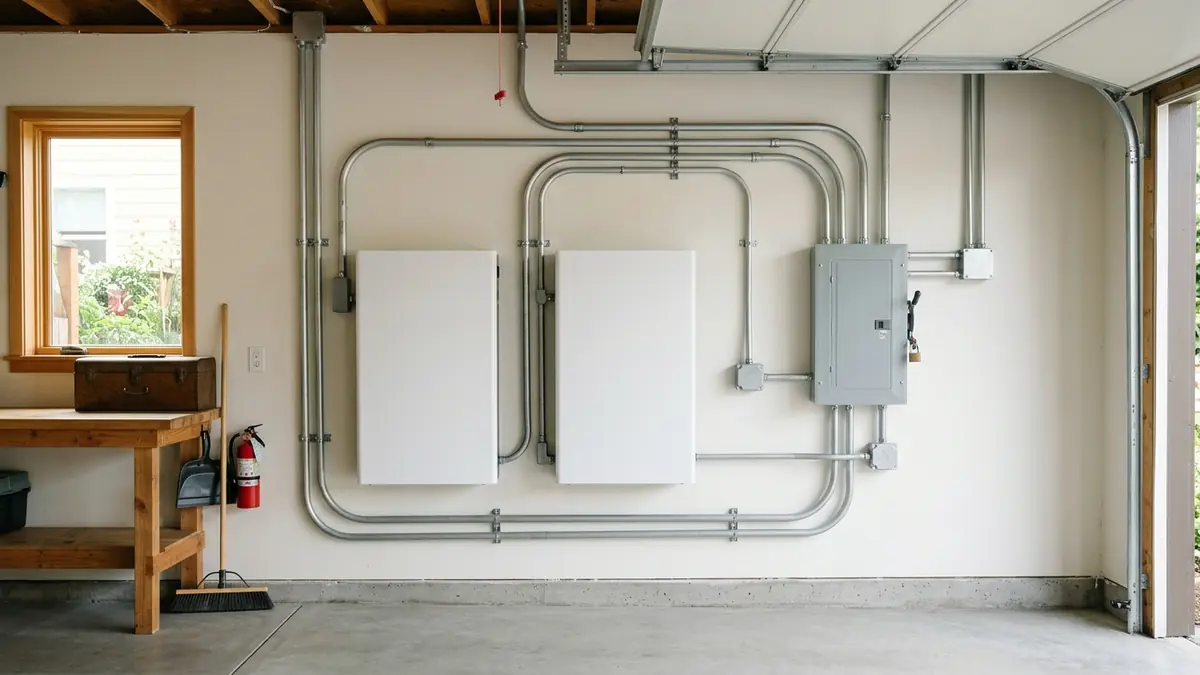
2026 Head-to-Head Engineering Comparison
Anker SOLIX X1 (15 kWh) vs FranklinWH aPower 2 (15 kWh)
15 kWh Slimline SOLIX X1 vs FranklinWH aPower 2 — side-by-side comparison grounded in CEC registry data (snapshot ) & international IEC technical datasheets.
Anker SOLIX X1 (15 kWh) vs FranklinWH aPower 2 (15 kWh): Which One Wins?
Anker SOLIX X1 (15 kWh) packs 15 kWh usable capacity with 6 kW continuous output (AC-coupled, 90% RTE), versus FranklinWH aPower 2 (15 kWh) at 15 kWh and 10 kW continuous (AC-coupled, 90% RTE). Anker SOLIX X1 (15 kWh) leads on single-unit stored energy while FranklinWH aPower 2 (15 kWh) delivers stronger continuous backup wattage for heavy 240V loads.
When to Choose Anker SOLIX X1 (15 kWh)
Choose Anker SOLIX X1 (15 kWh) if you want 15 kWh per unit, 6 kW continuous discharge (8.1 hrs essential-load runtime), and ac-coupled integration (LFP (LiFePO4)).
When to Choose FranklinWH aPower 2 (15 kWh)
Choose FranklinWH aPower 2 (15 kWh) if you prefer 15 kWh modular sizing, 10 kW output (8.1 hrs essential-load runtime), and ac-coupled compatibility with your inverter ecosystem.
Tie-Breaker Note: Key engineering factor: continuous kW output + AC LRA motor-starting surge vs installed $/kWh and whether you are building new solar (DC-coupled advantage) or retrofitting an existing array (AC-coupled simplicity).


Spec-by-Spec Comparison Matrix
| Technical Metric | Anker SOLIX X1 (15 kWh) | FranklinWH aPower 2 (15 kWh) |
|---|---|---|
| Usable Energy Capacity | 15 kWh | 15 kWh |
| Max Continuous Discharge | 6 kW | 10 kW ✓ |
| Round-Trip Efficiency | 90% | 90% |
| 1.5 kW Outage Runtime | 9.5 hrs | 9.5 hrs |
| Battery Chemistry | LFP (LiFePO4) | LFP (LiFePO4) |
| UL 9540 / US Listing | UL 9540 (Ed. 2 : 2020) (US Residential) | UL 9540 (Ed. 3) / UL 9540A (US Residential) |
Comparison FAQ — Anker SOLIX X1 (15 kWh) vs FranklinWH aPower 2 (15 kWh)
Which is better in 2026: Anker SOLIX X1 (15 kWh) or FranklinWH aPower 2 (15 kWh)?
Anker SOLIX X1 (15 kWh) packs 15 kWh usable capacity with 6 kW continuous output (AC-coupled, 90% RTE), versus FranklinWH aPower 2 (15 kWh) at 15 kWh and 10 kW continuous (AC-coupled, 90% RTE). Anker SOLIX X1 (15 kWh) leads on single-unit stored energy while FranklinWH aPower 2 (15 kWh) delivers stronger continuous backup wattage for heavy 240V loads.
When should I choose Anker SOLIX X1 (15 kWh) over FranklinWH aPower 2 (15 kWh)?
Choose Anker SOLIX X1 (15 kWh) if you want 15 kWh per unit, 6 kW continuous discharge (8.1 hrs essential-load runtime), and ac-coupled integration (LFP (LiFePO4)). Conversely, Choose FranklinWH aPower 2 (15 kWh) if you prefer 15 kWh modular sizing, 10 kW output (8.1 hrs essential-load runtime), and ac-coupled compatibility with your inverter ecosystem.
Are both Anker SOLIX X1 (15 kWh) and FranklinWH aPower 2 (15 kWh) eligible for US residential permits?
Anker SOLIX X1 (15 kWh) is marked CEC-Listed for US residential systems. FranklinWH aPower 2 (15 kWh) is marked CEC-Listed for US residential systems. Always verify current UL certificates with your local Authority Having Jurisdiction (AHJ).
More 2026 Head-to-Head Comparisons
Tesla Powerwall 3 (13.5 kWh) vs FranklinWH aPower 2 (15 kWh)Tesla Powerwall 3 (13.5 kWh) vs Enphase IQ Battery 5P (5 kWh)Tesla Powerwall 3 (13.5 kWh) vs EG4 WallMount AllWeather (14.3 kWh)FranklinWH aPower 2 (15 kWh) vs Enphase IQ Battery 10C (10 kWh)EG4 WallMount AllWeather (14.3 kWh) vs Fortress Power DuraRack (10.75 kWh)Tesla Powerwall 3 (13.5 kWh) vs SolarEdge Home Battery (9.7 kWh)