Aluminum Branch Wiring Hazard: Why Outlets Overheat & AlumiConn vs COPALUM Cost
Single-strand aluminum branch wiring (1965–1973) is 55× more likely to reach fire-hazard temperatures at outlets; CPSC-approved AlumiConn retrofits cost $2,400–$5,500.
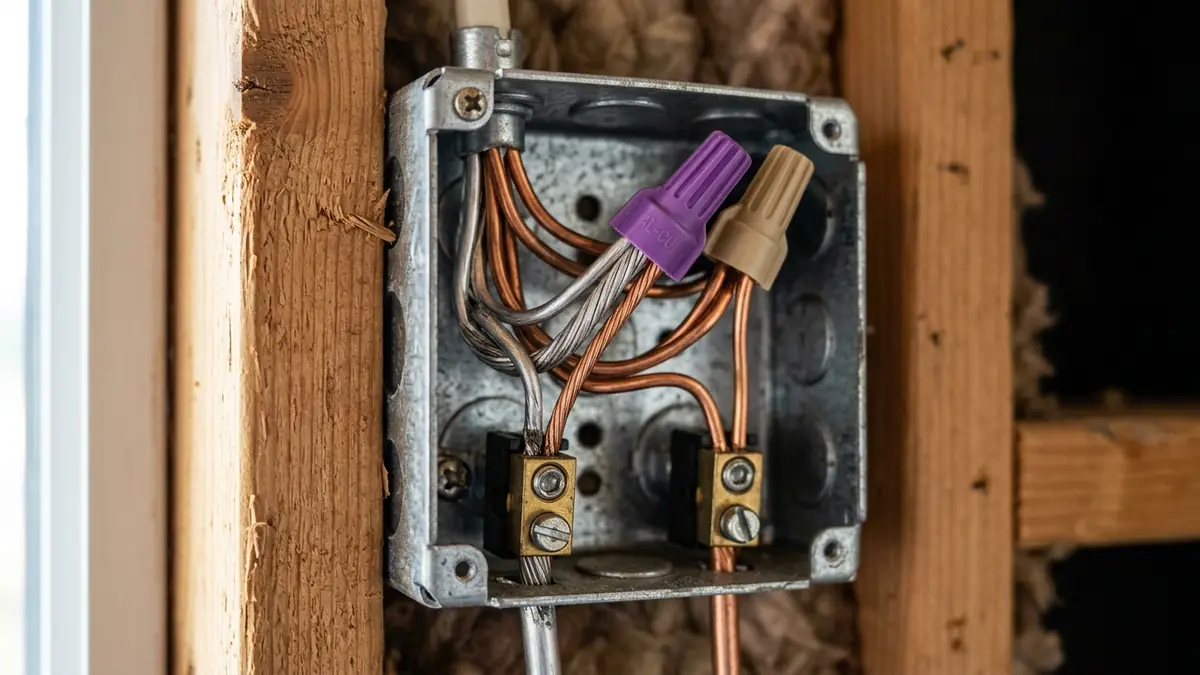
Aluminum Branch Wiring Remediation Options Compared (2026)
| Method | CPSC Approved? | Typical Cost (1,800 sq ft) | Insurance Acceptance |
|---|---|---|---|
| AlumiConn 3-port lug pigtailing (every outlet/switch/fixture) | Yes (Permanent) | $2,400 – $5,500 ($55–$90/device) | Widely accepted with electrician letter |
| COPALUM cold-weld crimp pigtailing | Yes (Permanent Crimp) | $4,000 – $8,500 | Universally accepted (scarce certified techs) |
| Purple Ideal Twister wire nuts (No. 65) | Not recommended by CPSC | $1,500 – $2,800 | Frequently rejected by insurers |
| Complete whole-house copper rewire | Yes | $10,000 – $22,000+ | Universally accepted (requires drywall repair) |
Why 1965–1973 Aluminum Wire Fails (And Why Heavy Feeder Cable Is Fine)
First, an important distinction: thick stranded aluminum service entrance cables (2/0 or 4/0 SER feeding your 200A panel, range, or dryer) are modern AA-8000 alloy and completely safe under NEC when torqued with antioxidant paste. The fire hazard is specifically 15A and 20A solid single-strand AA-1350 aluminum branch wiring installed between 1965 and 1973.
Old AA-1350 aluminum expands more than brass outlet screws when warm, creeps loose over decades, and forms an insulating aluminum oxide crust. Loose high-resistance connections glow red-hot inside wall boxes even while drawing a legal 12 amps — meaning the circuit breaker never trips.
Why AlumiConn Connectors Became the Practical 2026 Standard
AlumiConn connectors place the aluminum wire and a short copper pigtail into separate tin-plated aluminum ports filled with factory silicone sealant, clamped individually with calibrated set screws. Every single receptacle, switch, light fixture, and junction box on aluminum circuits must be remediated and documented on a signed electrician certificate for your insurance carrier.
Sources & Standards Referenced
- CPSC Publication 516: Repairing Aluminum Wiring — 55x fire-hazard connection study, COPALUM and AlumiConn permanent repair methods
- NFPA 70 Article 110.14 (Electrical Connections) — Listed aluminum-to-copper termination and calibrated torque requirements