Massachusetts Solar Panel Cost, Rebates & Net Metering (2026)
In Massachusetts (IECC Zone 5A), residential electricity averages 30.2¢/kWh with 4.3 NREL Peak Sun Hours/day. An 8 kW rooftop solar system averages $25,600 pre-rebate and produces ~9,794 kWh/year under 1:1 Retail.
2026 Massachusetts Installed Cost Benchmarks
| Residential Upgrade | 2026 MA Typical Range | Engineering & Incentive Note |
|---|---|---|
| 8 kW Turnkey Residential Solar | $23,552–$28,160 | Based on $3.20/W MA cash benchmark (pre-utility rebates) |
| 10 kW Turnkey Residential Solar | $29,440–$35,200 | Produces ~12,243 kWh/yr in Massachusetts |
| 200-Amp Electrical Panel Upgrade | $3,100–$5,800 | Permitted upgrade overseen by MA Board of State Examiners of Electricians |
| SEER2 / Cold-Climate Heat Pump | $10,500–$19,500 | Sized for IECC Zone 5A; verify R-454B & room-by-room load |
Solar Payback & Net Metering in Massachusetts (2026)
Among the strongest home electrification stacks in the US: 30¢/kWh power, 1:1 net metering, Mass Save heat pump grants & ConnectedSolutions battery payouts. Under 1:1 Retail, an 8 kW DC system generates roughly 9,794 kWh/yr (~$2,810/yr estimated bill offset at 30.2¢/kWh). Following the federal Section 25D expiration after Dec 31, 2025 (P.L. 119-21), Massachusetts homeowners should compare cash vs. battery self-consumption economics, TPO/Section 48E leases, and local utility rebates.
Mass Save (up to $10k heat pump + 0% HEAT Loan) + SMART Solar + ConnectedSolutions battery + HEAR
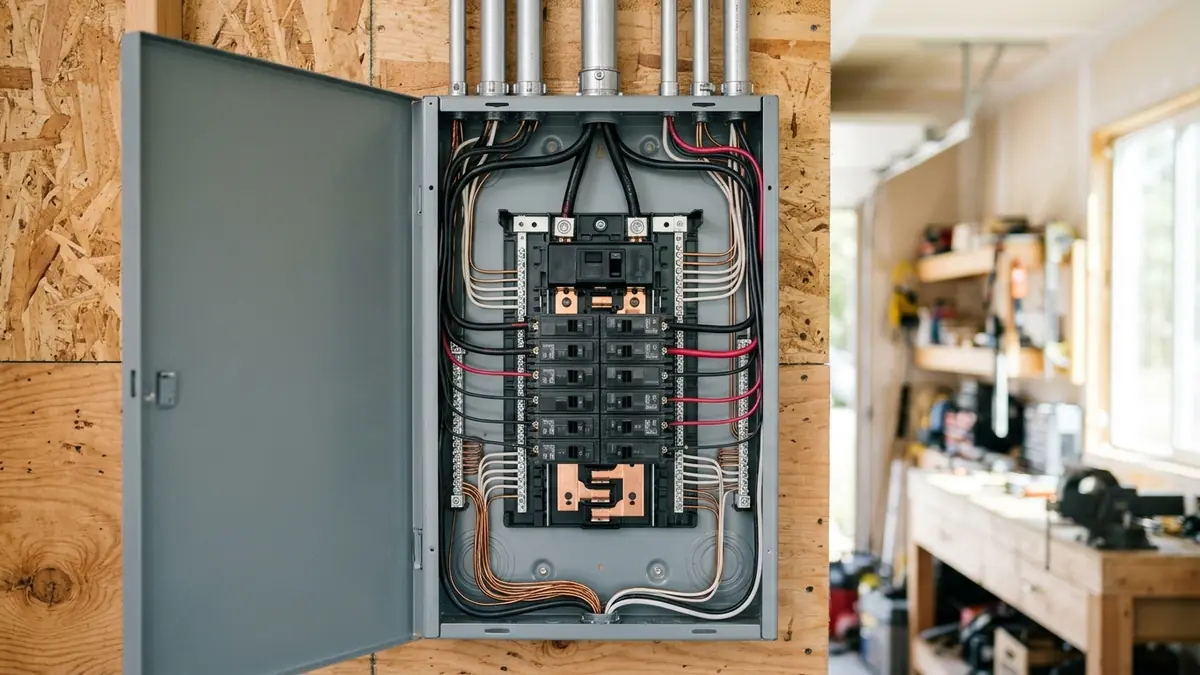
200-Amp Electrical Panel & EV Charger Considerations
Permitted 200-amp service upgrades in Massachusetts typically range from $3,100 to $5,800 depending on mast/trenching and utility service drop rules. When pairing solar with an EV charger on a 200A busbar, verify NEC 220.82 demand load and NEC 705.12(B) 120% backfeed limits (40A max backfeed breaker with a 200A main).
Contractor Licensing Authority: MA Board of State Examiners of Electricians.
Climate Zone (5A) & Heat Pump / SEER2 Engineering
Grid & Climate Profile: Northeast US Grid (Eversource, National Grid, Unitil). IECC Climate Zone 5A (avg latitude 42.3°N) shapes both cold-weather NEC 690.7 string voltage limits and heating/cooling load sizing.
Heat pump installations in Massachusetts typically run $10,500–$19,500 for permitted residential replacements. Compare SEER2 cooling efficiency and cold-climate HSPF2/COP against Massachusetts's average $2.08/therm natural gas tariff.
Primary Data Sources
- U.S. Energy Information Administration (EIA) — Electric Power Monthly: State-level residential retail electricity rate benchmarks (30.2¢/kWh reference).
- DSIRE — Database of State Incentives for Renewables & Efficiency: Active state net metering tariffs, SREC programs, and utility rebates.
- NREL PVWatts & NSRDB Solar Resource Data: Peak Sun Hours (4.3 hrs/day) and latitude irradiance benchmarks.
- IRS Clean Energy Credits & P.L. 119-21 Guidance: Federal Section 25D expiration (Dec 31, 2025) and commercial Section 48E TPO rules.