Vermont Solar Panel Cost, Rebates & Net Metering (2026)
In Vermont (IECC Zone 6A), residential electricity averages 22.1¢/kWh with 4.1 NREL Peak Sun Hours/day. An 8 kW rooftop solar system averages $24,800 pre-rebate and produces ~9,338 kWh/year under Avoided Cost.
2026 Vermont Installed Cost Benchmarks
| Residential Upgrade | 2026 VT Typical Range | Engineering & Incentive Note |
|---|---|---|
| 8 kW Turnkey Residential Solar | $22,816–$27,280 | Based on $3.10/W VT cash benchmark (pre-utility rebates) |
| 10 kW Turnkey Residential Solar | $28,520–$34,100 | Produces ~11,673 kWh/yr in Vermont |
| 200-Amp Electrical Panel Upgrade | $2,600–$4,700 | Permitted upgrade overseen by Vermont Electricians Licensing Board |
| SEER2 / Cold-Climate Heat Pump | $9,200–$17,500 | Sized for IECC Zone 6A; verify R-454B & room-by-room load |
Solar Payback & Net Metering in Vermont (2026)
Green Mountain Power leads the US in residential virtual power plant battery programs. Under Avoided Cost, an 8 kW DC system generates roughly 9,338 kWh/yr (~$1,610/yr estimated bill offset at 22.1¢/kWh). Following the federal Section 25D expiration after Dec 31, 2025 (P.L. 119-21), Vermont homeowners should compare cash vs. battery self-consumption economics, TPO/Section 48E leases, and local utility rebates.
Efficiency Vermont Heat Pump & Panel Rebates + Green Mountain Power Battery Lease + HEAR
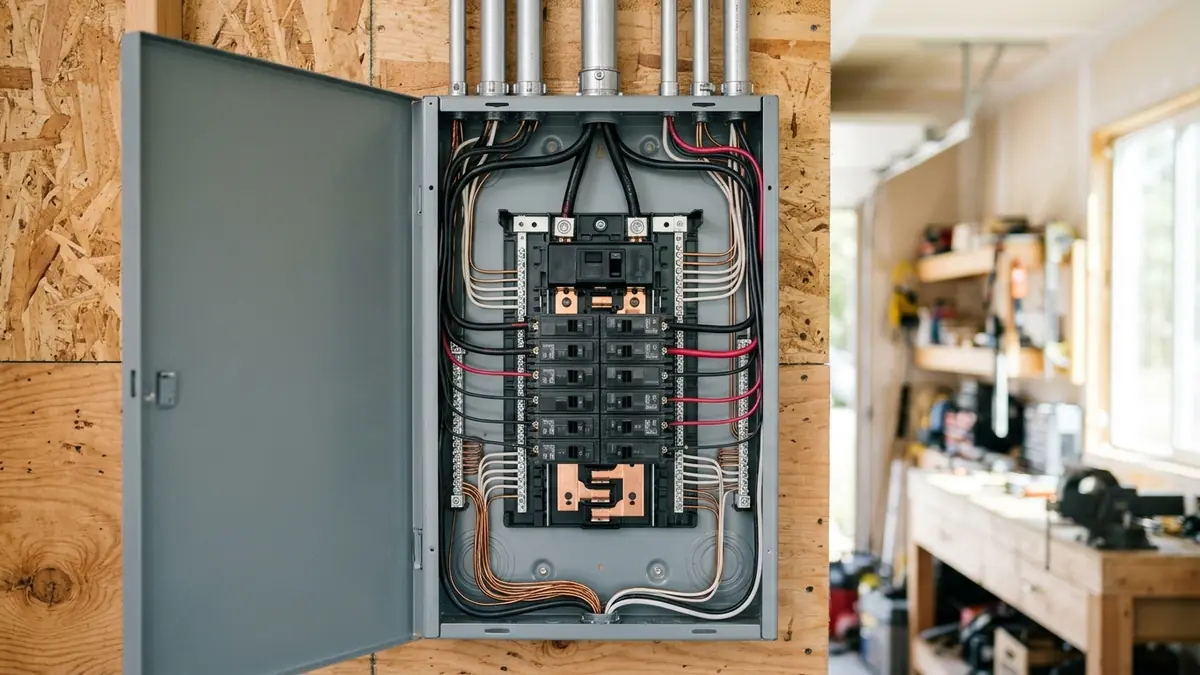
200-Amp Electrical Panel & EV Charger Considerations
Permitted 200-amp service upgrades in Vermont typically range from $2,600 to $4,700 depending on mast/trenching and utility service drop rules. When pairing solar with an EV charger on a 200A busbar, verify NEC 220.82 demand load and NEC 705.12(B) 120% backfeed limits (40A max backfeed breaker with a 200A main).
Contractor Licensing Authority: Vermont Electricians Licensing Board.
Climate Zone (6A) & Heat Pump / SEER2 Engineering
Grid & Climate Profile: Northeast US Grid (Green Mountain Power (GMP), Burlington Electric). IECC Climate Zone 6A (avg latitude 44.3°N) shapes both cold-weather NEC 690.7 string voltage limits and heating/cooling load sizing.
Heat pump installations in Vermont typically run $9,200–$17,500 for permitted residential replacements. Compare SEER2 cooling efficiency and cold-climate HSPF2/COP against Vermont's average $1.76/therm natural gas tariff.
Primary Data Sources
- U.S. Energy Information Administration (EIA) — Electric Power Monthly: State-level residential retail electricity rate benchmarks (22.1¢/kWh reference).
- DSIRE — Database of State Incentives for Renewables & Efficiency: Active state net metering tariffs, SREC programs, and utility rebates.
- NREL PVWatts & NSRDB Solar Resource Data: Peak Sun Hours (4.1 hrs/day) and latitude irradiance benchmarks.
- IRS Clean Energy Credits & P.L. 119-21 Guidance: Federal Section 25D expiration (Dec 31, 2025) and commercial Section 48E TPO rules.